

Have you ever experienced this: finding yourself panting after climbing just a few flights of stairs, or feeling tightness in the chest and short of breath after walking a little faster, only for an ECG and chest CT scan at the hospital to show that ‘everything is normal’? So you tell yourself: it’s probably just a sign of getting older, or perhaps a lack of exercise recently.
But the body doesn’t send out signals for no reason. When chest tightness and shortness of breath recur without a clear cause, it may be your lungs ‘calling for help’.
I. An Easily Overlooked ‘Silent Killer’
When experiencing chest tightness and shortness of breath, many people’s first instinct is to suspect a heart problem. After undergoing a full range of tests, including an ECG and a cardiac ultrasound, the results show that the heart is fine. At this point, one aspect that is easily overlooked is that lung function may already be compromised.
Pulmonary function tests differ fundamentally from chest CT scans. A CT scan uses X-rays to examine morphological changes in the lungs, chest, pleura, heart and major blood vessels; a pulmonary function test, on the other hand, assesses whether the lungs are functioning properly, focusing on whether the respiratory system’s ventilation and gas exchange functions are normal.
In the early stages of many lung diseases, changes are barely visible on CT scans, yet lung function has already begun to decline silently. Some people experience only occasional coughing or shortness of breath and do not take it seriously; by the time a CT scan reveals a problem, their lung function may already have deteriorated significantly.
This is why some people, even after undergoing a chest CT scan, still need to have a pulmonary function test.
II. A Health Threat More Prevalent Than One Might Imagine
Chronic obstructive pulmonary disease (COPD) is a chronic respiratory condition characterised by persistent airflow limitation. Put simply, it is a ‘traffic jam’ in the lungs – whilst inhaling remains relatively easy, exhaling becomes exceptionally difficult, causing stale air to remain trapped in the lungs and preventing fresh air from entering. The prevalence of COPD among people aged 40 and over in China has reached 13.7 per cent.
However, public awareness of COPD is very low; fewer than 3 per cent of patients are aware that they have the condition, and nearly 90 per cent have never received a definitive diagnosis. For the majority of patients, the disease has already progressed to the intermediate or advanced stages by the time of diagnosis.
The early symptoms of COPD are very subtle. They often manifest as a cough, phlegm, chest tightness or shortness of breath following physical activity, and are easily overlooked or mistaken for a common cold, or dismissed as a ‘natural part of ageing’.
III. What signs indicate that your lungs may be ‘calling for help’?
According to public health information published by various medical institutions, the following symptoms warrant attention:
Chest tightness and shortness of breath following physical activity. If you frequently experience chest tightness or shortness of breath after physical activity—particularly if these symptoms gradually worsen during the activity—it is advisable to undergo a lung function test. One of the most typical symptoms of COPD is ‘shortness of breath upon exertion’, making it difficult to climb stairs. In the early stages, shortness of breath may only be felt when climbing stairs or walking briskly; as the condition progresses, even minor activities such as getting dressed or washing can become strenuous.
Chronic cough and production of sputum. A long-term, recurrent cough and production of sputum, which worsens particularly in the early morning or during cold seasons. The cough is often intermittent, most noticeable upon waking, and becomes persistent as the condition progresses; the sputum is typically white and mucous. Particular vigilance is warranted if the cough and sputum production have persisted for more than two years.
Recurrent ‘colds’ that persist. You are more prone to catching ‘colds’ than others during changes in weather or seasonal transitions, and these often take a long time to clear up.
Wheezing or chest tightness. Some patients may experience a sensation of chest tightness or hear wheezing sounds whilst breathing.
IV. Pulmonary Function Tests
Pulmonary function tests can detect COPD earlier, more quickly and more accurately than CT scans. Even in the early stages, problems can be rapidly identified through pulmonary function tests.
Pulmonary function testing is a physical, non-invasive method that causes virtually no harm to the body; it is painless, radiation-free and rarely causes discomfort. Through pulmonary function testing, it is possible to detect at an early stage whether respiratory function is impaired, as well as the extent and type of impairment. It can also assess the severity of the disease, diagnose the location of lesions, evaluate the effectiveness of treatment and guide adjustments to treatment plans.
Academician Zhong Nanshan has repeatedly urged: “Take lung function testing seriously; it should be carried out as routinely as measuring blood pressure!” He recommends that people aged 40 and over include lung function testing in their routine health check-ups; in particular, those aged 40 and over with a history of long-term smoking, chronic respiratory symptoms or a family history of such conditions are advised to include lung function testing in their annual health check-ups.
Currently, lung function testing has been incorporated into the national routine health check-up programme. It is recommended that people aged 40 and over, or those at high risk of chronic respiratory diseases, undergo lung function testing once a year.
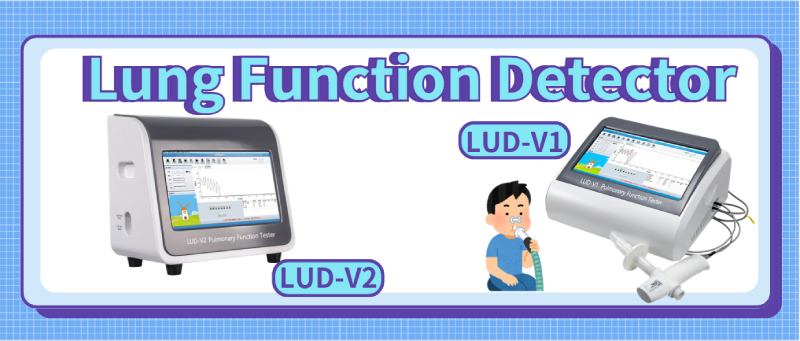
V. Pinyuan LUD-V Series: Making Lung Function Testing More Accessible
The importance of lung function testing is becoming increasingly apparent, and the accessibility of such testing is equally crucial.
Pinyuan Medical’s LUD-V series spirometers provide medical institutions at all levels with a professional, efficient and convenient solution for lung function testing.
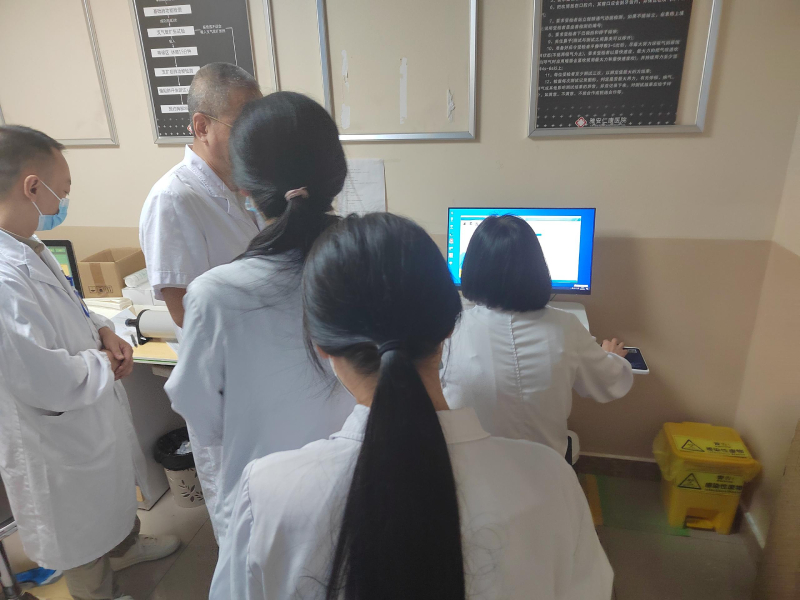
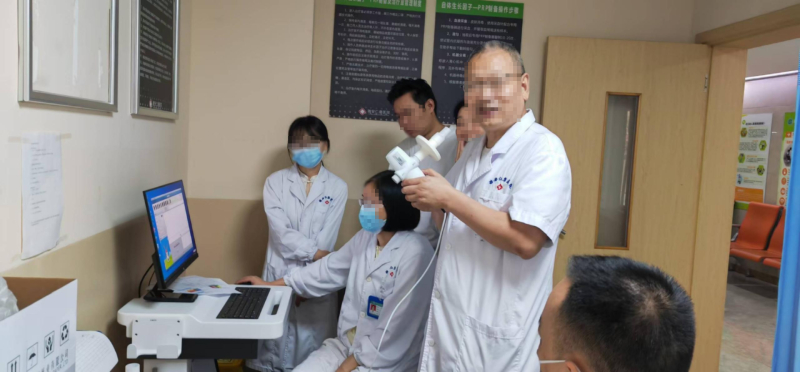
Widely deployed and clinically validated, Pinyuan spirometers are already in use at numerous medical institutions across the country. In February 2025, Xianhe Town Health Centre completed the installation of the LUD-V4, a device capable of rapidly screening for respiratory conditions such as chronic obstructive pulmonary disease (COPD) and asthma. Zhaojue County People’s Hospital completed the installation of the LUD-V3 in October 2024. Jun County Traditional Chinese Medicine Hospital has installed the LUD-V4, enabling simultaneous health monitoring of the skeletal and respiratory systems. Furthermore, Jiangyin Baiyi Traditional Chinese Medicine Hospital completed the installation and training for the LUD-V1 in June 2024.
Chest tightness and shortness of breath may not be caused by a heart problem, but rather by the lungs ‘calling for help’. The early symptoms of COPD are subtle, but early detection and assessment are entirely achievable through pulmonary function testing.
Pay attention to every breath and take every instance of chest tightness seriously – keep a close eye on your lung function and ensure your health is backed by solid evidence.
Post time: Aug-04-2026