

Osteoporosis is known as the ‘silent epidemic’ — it erodes bones without warning, rendering them brittle. Many people suffer fractures of the wrist, hip or spine without any prior warning, triggered by a minor fall or even a simple sneeze. According to data from the Chinese Osteoporosis Epidemiological Survey, the prevalence of low bone mass among people aged 40 and over in China stands at 40.9 per cent, whilst among those aged 60 and over, it reaches 47.5 per cent.
Faced with the enormous demand for bone health screening, dual-energy X-ray absorptiometry (DXA) has become the ‘gold standard’ for bone density testing recommended by the World Health Organisation (WHO), thanks to its high precision, low radiation exposure and rapid testing capabilities. In China, a name that is gaining increasing prominence is frequently appearing on the equipment procurement lists of major Grade A tertiary hospitals: Pinyuan Medical.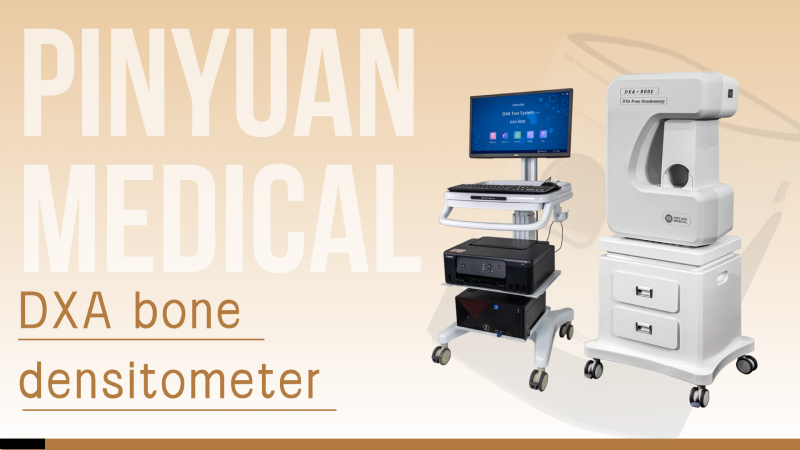
Currently, Pinyuan Medical’s dual-energy X-ray absorptiometry (DXA) scanners have been installed in hundreds of large medical institutions, including Beijing Century Altar Hospital (affiliated with Capital Medical University), Xuzhou Medical University Affiliated Hospital, Jiaxing First People’s Hospital, Lu’an People’s Hospital and Tianjin Beichen Hospital. More than 5,000 medical institutions nationwide are using Pinyuan bone densitometers, including over 200 Grade A tertiary hospitals and more than 500 Grade B secondary hospitals, earning high clinical recognition and unanimous praise from industry experts.
Why have so many demanding Grade A tertiary hospitals, almost in unison, chosen Pinyuan?
The answer lies in three key features: fast imaging, high accuracy and low radiation.
I. Fast imaging: Millisecond imaging puts an end to long waiting times for patients
During peak outpatient hours at Class A tertiary hospitals, every minute represents a balancing act between efficiency and patient experience.
Pinyuan’s Dexa Pro series of dual-energy X-ray bone densitometers utilises the world’s most advanced third-generation dual-energy X-ray technology with cone-beam imaging, delivering high-quality images in a short time, ensuring high accuracy and excellent reproducibility in bone density calculations.
Taking the DXA-800E as an example, the device is equipped with cone-beam imaging technology and a high-sensitivity digital flat-panel detector, enabling high-definition imaging of the forearm within 4 seconds and clearly displaying the microstructure of the distal radius and ulna. The entire examination focuses on the distal third of the radius and ulna—areas that are easily accessible, making the procedure simple and quick, with no need for complex disinfection procedures. It typically takes only a few minutes from the moment a patient enters the examination room until they receive their report.
Case studies show that following the deployment of Pinyuan dual-energy X-ray bone densitometers in primary healthcare centres in Anji County, patient examination times have been significantly reduced and testing efficiency improved. Meanwhile, in Grade A tertiary general hospitals such as Jiaxing First Hospital, the DXA-800E’s rapid testing capability has become a ‘efficiency booster’ for outpatient bone density screening.
For Grade A3 hospitals, this translates to higher equipment utilisation rates, shorter patient waiting times and smoother outpatient processes.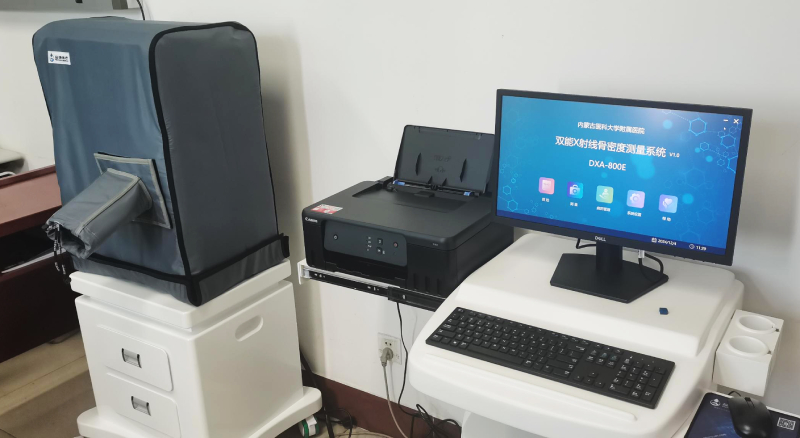
II. High Accuracy: Cone-beam imaging combined with triple-positioning technology ensures more precise data
The accuracy of bone density testing is directly linked to the early diagnosis of osteoporosis and the formulation of treatment plans. A single measurement error could lead to a missed or misdiagnosis.
The Pinyuan Dexa Pro-I utilises dual-energy X-ray absorptiometry (DXA), whereby the device emits X-ray beams of two different energies—low-energy and high-energy—which simultaneously irradiate the skeletal region. As minerals such as calcium in the bones absorb X-rays of different energies to varying degrees, the computer is able to calculate the mineral content of the bones by measuring the degree of attenuation of the X-rays of different energies as they pass through the bone. This technology effectively eliminates interference from soft tissues within the body, significantly improving measurement accuracy.
In terms of imaging, cone-beam imaging technology delivers higher image resolution. High-resolution images form the basis for accurate bone density calculations—only when images are sufficiently clear and precise can they provide doctors with a reliable basis for diagnosis. Compared with traditional equipment, the Pinyuan dual-energy X-ray bone densitometer outperforms its counterparts in image quality, scanning speed and the accuracy of bone density calculations.
Particularly noteworthy is the triple-positioning technology—an innovative system combining laser positioning, wrist positioning and palm positioning—which effectively reduces measurement errors caused by positioning deviations. The device’s control panel also features a positioning observation window, allowing doctors to monitor and adjust the patient’s position with ease. For the distal forearm region, where osteoporosis is highly prevalent, the system enables precise regionalised detection, sensitively capturing even subtle changes in bone mass at an early stage.
Pinyuan’s dual-energy X-ray bone densitometer delivers highly accurate and reproducible measurement results, having earned a strong reputation among users through long-term clinical validation. As one industry expert remarked: ‘The device offers high accuracy, strong reproducibility, consistent quality and a low failure rate’.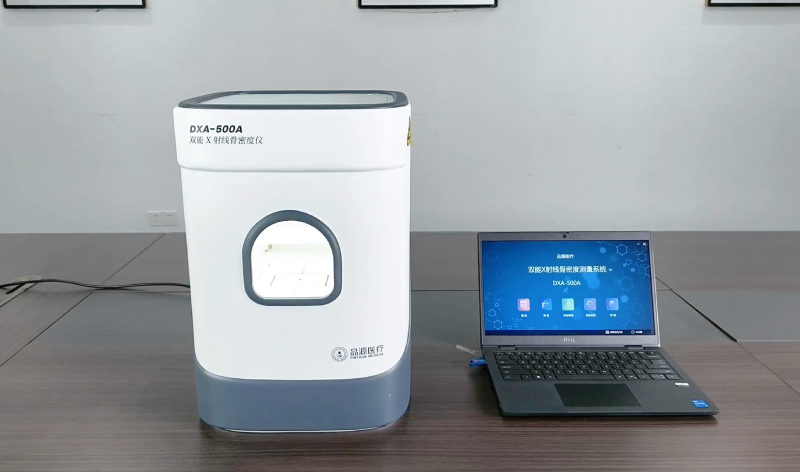
III. Low Radiation: Micro-dose + Remote Operation + Patented Protection, Providing Peace of Mind for Both Doctors and Patients
Radiation protection is one of the key considerations for Grade A tertiary hospitals when selecting bone densitometry equipment.
Pinyuan’s dual-energy X-ray bone densitometers are fully equipped with comprehensive protective features.
Firstly, the radiation dose is very low. The DXA-800E dual-energy X-ray bone densitometer utilises pulsed X-ray technology, which controls the duration and intensity of the X-ray emission, releasing radiation only for the brief moment of the scan. The dose received by a patient during a single scan is equivalent to that from 20 minutes of sun exposure, making it virtually negligible.
Secondly, there is the remote operation design. Both the Dexa Pro-I and the DXA-800E support remote operation, with the main unit positioned at a distance of 1.5 to 3.0 metres from the operating physician; at this distance, the physician is safely shielded from radiation. This means that the operating physician can complete the entire procedure from a separate control console, ensuring reliable protection during long-term work.
Thirdly, the patented forearm shielding box. During the scan, the device provides multi-directional protection for areas not being measured; everything except the forearm—the area being scanned—is shielded, minimising the radiation dose to the patient whilst also safeguarding the health of those nearby.
Fourthly, Some models are equipped with lead-free compartments. This overcomes the space constraints associated with traditional DXA equipment, which requires a dedicated lead-lined room. This not only significantly reduces the cost of refurbishing premises for healthcare institutions but also shortens the equipment deployment cycle.
For Grade A tertiary hospitals, this means that doctors can operate the equipment with confidence over the long term, patients can undergo repeated scans with peace of mind, and hospitals can deploy the equipment flexibly.
More than just ‘fast, accurate and safe’—the all-round capabilities of Pinyuan’s dual-energy X-ray bone densitometer
In addition to its three core advantages of fast imaging, high accuracy and low radiation, Pinyuan’s dual-energy X-ray bone densitometer offers further compelling reasons for Grade A tertiary hospitals to choose it:
One machine, multiple uses; suitable for all age groups. The DXA-800E innovatively integrates two major systems: bone density testing and bone age assessment. A single device can perform both bone density testing and bone age assessment for children and adolescents. The device features a built-in reference database specifically tailored to the Chinese population, which, combined with the physiological characteristics of Chinese skeletons, accurately outputs indicators such as bone mineral density (BMD), T-scores, Z-scores, fracture risk probability (FRAX) and BMI analysis. From monitoring the growth and development of children and adolescents to the early screening of osteoporosis and fracture risk warning in middle-aged and elderly patients, a single device covers skeletal health needs across the entire life cycle.
System Integration for Efficient Collaboration. Pinyuan’s dual-energy X-ray bone densitometer supports connection to HIS and PACS systems, enabling seamless data integration. The installation case at the Central Hospital of the Jiaomei Group demonstrates that the device integrates seamlessly with the hospital’s HIS system, with data transmitted automatically. This eliminates the tedium and errors associated with manual data entry, further enhancing work efficiency and diagnostic quality.
Comprehensive coverage across all scenarios. Pinyuan Medical has established a complete product portfolio ranging from the Dexa Pro series (split-type, remote operation) to the DXA-800 series (split-type/integrated, lead-free room) and the DXA-500 series (bedside portable), meeting the diverse needs of institutions ranging from Grade A tertiary hospitals to primary healthcare centres.
Industry standard-setter. Pinyuan Medical was a participating drafter of the national standard ‘Specific Technical Requirements for Dual-Energy X-ray Bone Densitometers’. The company holds all technical patents for dual-energy X-ray bone densitometers, and its products are certified under the ISO 9001 International Quality Management System, Huaguang CMD certification and the EU CE mark.
From Beijing Shijitan Hospital affiliated with Capital Medical University to the Affiliated Hospital of Xuzhou Medical University, from Jiaxing First Hospital to Lu’an People’s Hospital, and from Tianjin Beichen Hospital to Weifang People’s Hospital—the fact that over 200 Grade A tertiary hospitals have chosen Pinyuan’s dual-energy X-ray bone densitometers stands as a powerful endorsement of their quality.
Fast imaging, high precision and low radiation—this is not merely an empty advertising slogan, but a testament to the capabilities that Pinyuan Medical has honed step by step through cutting-edge technologies such as third-generation cone-beam imaging, three-point precise measurement, pulsed micro-dose radiation, remote operation and patented radiation protection.
At a time when the ‘silent epidemic’ threatens the bone health of hundreds of millions of Chinese citizens, Pinyuan Medical is providing trusted bone density testing solutions to medical institutions nationwide,backed by cutting-edge technology, rigorous national standards, and world-class manufacturing quality.
Post time: Jun-23-2026