

I. A milestone often overlooked by many
For many people, the age of 35 marks the start of a career on the rise and an increase in family responsibilities, yet few realise that this is also a ‘turning point’ for bone health.
A popular science article from Peking University People’s Hospital points out: ‘In the process of bone formation, there is a concept known as peak bone mass—the point at which bone mass is at its highest. This peak occurs around the age of 35; after the age of 40, bone mass begins to decline, and the rate of decline gradually accelerates with age.’” A bone density study involving 2,772 women also confirmed that bone density peaks between the ages of 35 and 39, begins to decline after the age of 45, and drops significantly after the age of 50.
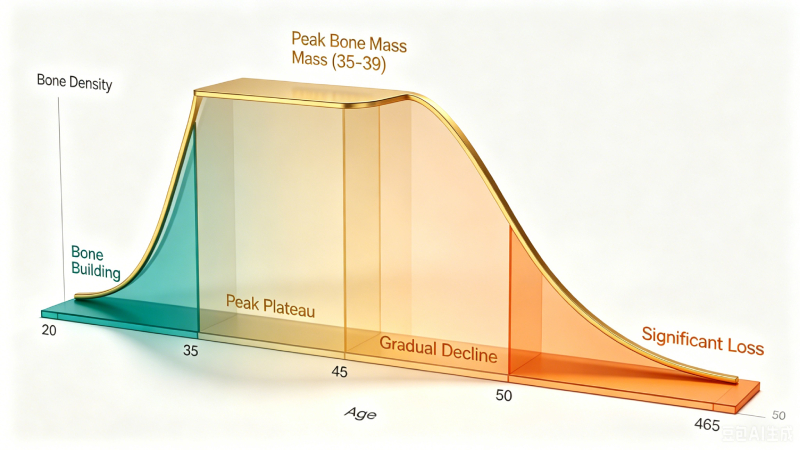
In other words, the period before the age of 35 is a phase of ‘saving’ bone mass, whilst the period after 35 marks the beginning of ‘spending’ it. The more one ‘saves’ in youth, the more substantial the ‘bone capital’ available in old age; insufficient ‘savings’, however, may lead to an early risk of bone loss.
II. A Health Issue More Prevalent Than Imagined
Many people regard osteoporosis as a ‘disease of old age’, but the reality is far more serious than imagined.
Those with low bone mass—people whose bone mass is below normal levels but does not yet meet the diagnostic criteria for osteoporosis. The 2018 Epidemiological Survey Report on Osteoporosis in China reveals that 32.9 per cent of people aged 40 to 49 in China have reduced bone mass. In other words, one in every three people in their 40s has bone mass significantly below normal levels, and they are all at high risk of developing osteoporosis.
This proportion continues to rise with age. The prevalence of low bone mass among those aged 50 and over reaches 46.4 per cent, whilst the prevalence of osteoporosis in this age group stands at 19.2 per cent; among those aged 65 and over, the prevalence rises to 32.0 per cent.
III. A ‘Silent’ Threat to Health
Osteoporosis is known as the ‘silent epidemic’. It typically presents with no obvious symptoms during its progression and worsens gradually without the patient realising it, until the harm becomes apparent following a fracture caused by an accidental fall or similar incident.
Common early warning signs include:
- Unexplained lower back pain: a persistent, diffuse or intermittent dull ache in the lower back or spine, which worsens after prolonged sitting or standing
- Loss of height: a reduction of more than 3 centimetres compared to one’s younger self, or the development of a hunched back
- Fractures caused by minor trauma: wrist or hip fractures resulting from a fall from standing height
- Night-time cramps and general weakness
However, public awareness and diagnosis rates for osteoporosis remain very low. The vast majority of people are unaware of their own bone health. By the time they begin to pay attention to their bone health following the onset of symptoms, a significant proportion of bone mass has often already been lost.
IV. An Irreplaceable Assessment Tool
Precisely because osteoporosis is asymptomatic in its early stages and progresses insidiously, bone density testing has become an irreplaceable assessment tool.
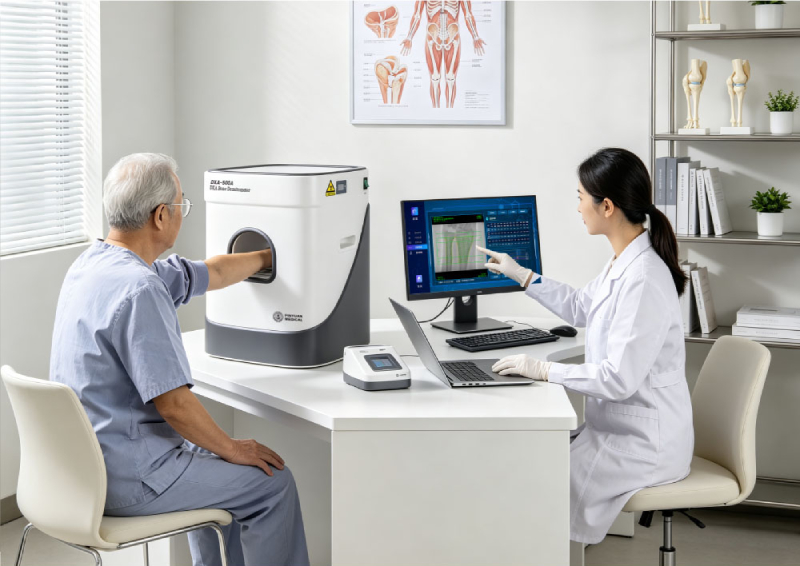
Dual-energy X-ray absorptiometry (DXA) is recognised by the World Health Organisation (WHO) as the ‘gold standard’ for diagnosing osteoporosis. By emitting two X-ray beams of different energies and utilising the difference in absorption between bone and soft tissue, it accurately calculates bone mineral content.
Test results are presented as T-scores: a T-score of ≥-1.0 is considered normal; a T-score of -2.5 < T-score < -1.0 indicates reduced bone mass; and a T-score of ≤-2.5 indicates osteoporosis. A single test provides a clear picture of one’s bone health.
By 2025, bone density screening had been incorporated into the basic health check-up programme. Regular bone density screening is particularly important for people aged 40 and over, postmenopausal women, those with a family history of osteoporosis, those taking long-term hormone therapy, and those with low body weight.
V. Pinyuan Medical: Making Bone Density Screening More Accessible
The importance of bone density screening is becoming increasingly apparent, and its accessibility is equally crucial.
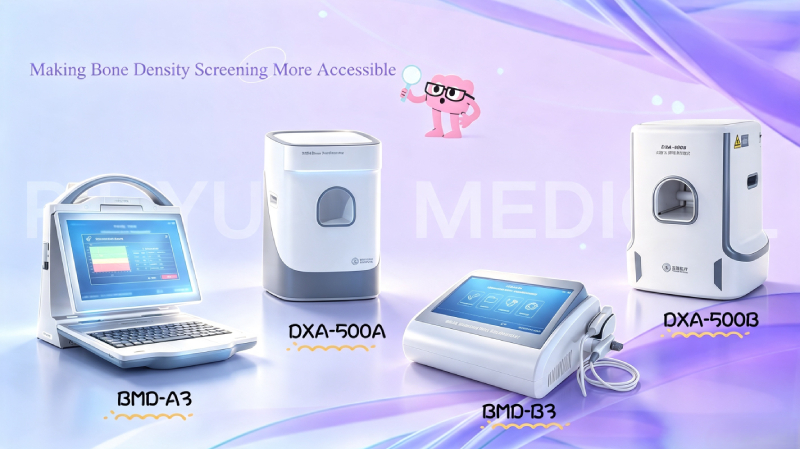
Pinyuan Medical has specialised in the field of bone health screening for many years and is one of the drafting organisations for the national industry standard for dual-energy X-ray absorptiometry (DXA) scanners. Pinyuan’s DXA series of dual-energy X-ray absorptiometry scanners utilises internationally recognised DXA technology, incorporating third-generation cone-beam imaging technology and high-sensitivity digital flat-panel detectors, offering fast imaging, high precision and low radiation exposure. The equipment has been installed in hundreds of medical institutions nationwide, including Beijing Century Altar Hospital (affiliated with Capital Medical University), Xuzhou Medical University Affiliated Hospital, Jiaxing First Hospital, Lu’an People’s Hospital, Tianjin Beichen Hospital and Weifang People’s Hospital.
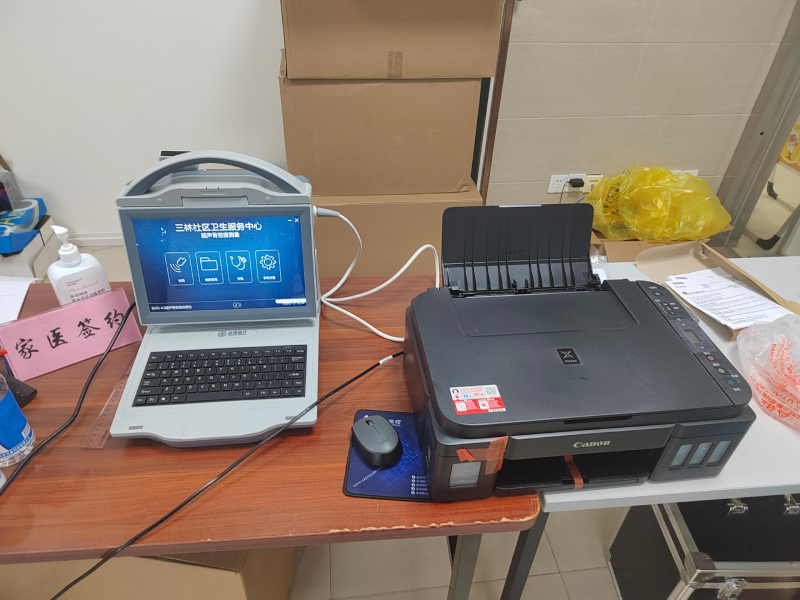
The Pinyuan BMD-A Series Ultrasound Bone Density Analyser utilises fully dry ultrasound technology, ensuring the entire process is free from ionising radiation and non-invasive. It can be flexibly deployed in settings such as community screening, rural charity clinics and rapid bedside testing. It has already been adopted by numerous medical institutions across the country, including Wuhan Central Hospital, the Air Force Specialised Medical Centre, Hubei Provincial Maternal and Child Health Hospital and Dongying People’s Hospital.
Before the age of 35, bone mass is ‘accumulated’; after the age of 35, it is ‘depleted’. Do you still have enough of this ‘bone capital’ to last? Only a bone density test can provide the answer.
Post time: Jul-29-2026