
Today, as the prevention and treatment of osteoporosis become increasingly important, it has become a real need for medical institutions to purchase portable bone density meters to improve the efficiency and accessibility of diagnosis and treatment. Portable devices mean greater mobility and more flexible examination scenarios, but the technical route still needs to be chosen between ultrasound (QUS) and dual-energy X-ray (portable DXA). Although both are “portable”, their principles, positioning and applicable scenarios are significantly different. When making purchasing decisions, one should base them on a clear self-positioning and clinical needs.
1. Core Differences: From “Screening Tools” to “Gold Standard for Diagnosis”
The essence of technology and diagnostic professionalism
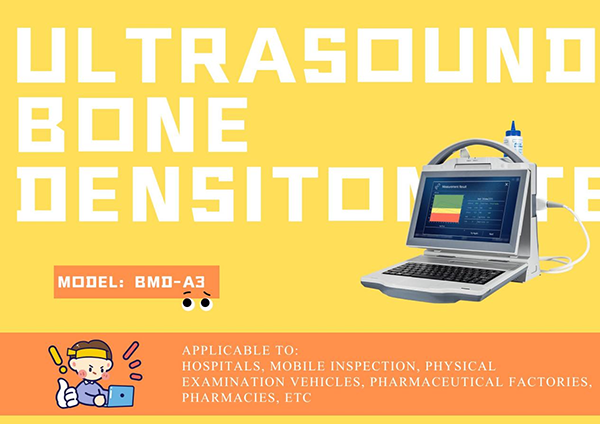
Portable ultrasonic bone densitometer: Usually measured by the tibia or radius, it indirectly reflects bone density and bone structure through ultrasonic parameters. Its advantage is that it is completely radiation-free and highly safe. However, it is a screening and risk assessment tool, and its measurement results are relevant to the internationally recognized “gold standard”, but it cannot be directly used for the clinical diagnosis of osteoporosis. The question it answers is: “Could the risk of fractures increase?”
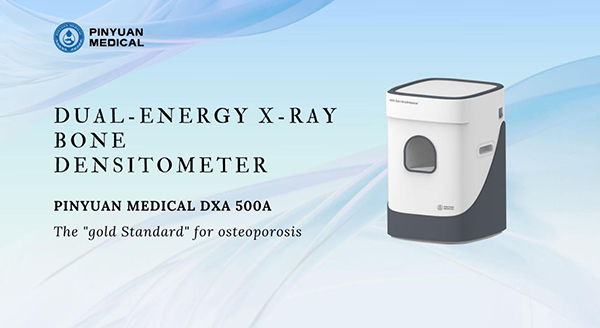
Portable dual-energy X-ray bone densitometer: Utilizing dual-energy X-ray technology, its results serve as the direct basis for the World Health Organization’s (WHO) diagnostic criteria for osteoporosis and are recognized as the standard for fracture risk prediction and drug efficacy monitoring. The question it answers is: “Has it been diagnosed with osteoporosis?” How serious is it?”
The connotation of portability and its application scenarios
Portable ultrasound: Usually the size of a hand-held or notebook, it is light in weight and has good mobility. It is applicable to scenarios such as free medical consultations in rural areas, home visits in communities, bedside examinations, and mobile services of physical examination vehicles, and can truly achieve “equipment finding people”.
Portable dual-energy X-ray: Compact in size, its appearance is similar to that of a household air fryer, and it can be easily moved by a single person. Its portability is reflected in the fact that it can be flexibly transferred between different departments within the hospital (such as orthopedic wards and endocrinology clinics), enabling door-to-door screening.
2. Decision-making Path: Match the hospital’s role with its core goals
The key to making a choice lies in clarifying the core purpose of the procurement: is it to expand the coverage of screening or to enhance the capacity for diagnosis and treatment?
If the core demand of your institution is “active screening and health management”, such as community health service centers, township health centers, health check-up centers or large-scale elderly care institutions, and the goal is to quickly and safely identify high-risk individuals from a wide range of people, then a portable ultrasound bone densitometer is a better choice. Its features of no radiation, low cost and high mobility can perfectly support the initial screening of large-scale populations, making it an ideal tool for building the “bottom line” of hierarchical medical treatment.
If the core demand of your institution is “precise diagnosis and standardized treatment”, for instance, clinical departments such as orthopedics, endocrinology, geriatrics, and gynecology in secondary and above hospitals, which need to provide patients with clear diagnoses, formulate treatment plans, and monitor therapeutic effects, then a portable dual-energy X-ray bone densitometer is a necessary configuration. It can provide diagnosis-level reports, directly support clinical decision-making, and meet the accuracy requirements of efficacy follow-up.
3. Factors still need to be considered
In addition to the core positioning, it is also necessary to weigh the following:
Target population: If it is necessary to serve special groups such as pregnant women and children, radiation-free ultrasound equipment has a key advantage.
In conclusion, portable ultrasound and portable dual-energy X-rays are not in a competitive relationship but rather complementary tools serving different clinical scenarios. For primary medical institutions that focus on prevention and screening, portable ultrasound is a highly cost-effective “scout”. For clinical departments that focus on diagnosis and treatment, portable dual-energy X-rays are important “precision yardsticks”.
Post time: Dec-18-2025