
Value Evaluation and Application Path Analysis of Dual-energy X-ray Bone Densitometer in Modern Medical Institutions
Against the backdrop of the current medical market increasingly emphasizing precision and specialization, dual-energy X-ray absorptiometry (DXA) has become an important piece of equipment in modern medical institutions, especially in orthopedics, endocrinology, geriatrics and health management centers. Medical institutions have multiple considerations in equipment procurement – it’s not just about buying a single instrument, but also introducing a systematic solution that enhances diagnosis and treatment levels, strengthens the competitiveness of disciplines, and optimizes operational efficiency.
1. Precise diagnosis, an important tool for enhancing clinical diagnosis and treatment levels
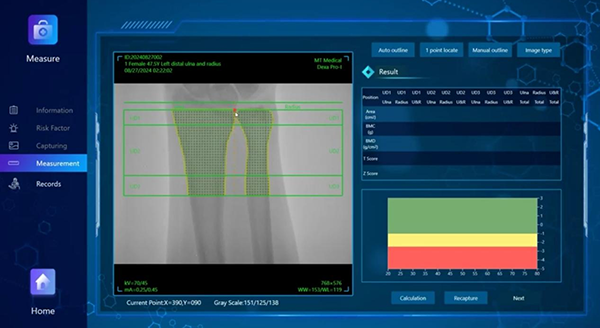
The dual-energy X-ray bone densitometer, through the precise measurement of high and low energy X-rays, has become the internationally recognized “gold standard” for diagnosing osteoporosis. For medical institutions, this means:
Diagnostic accuracy revolution: Compared with traditional single-energy X-ray or ultrasound testing, DXA provides more precise bone density measurement data with a very low error rate, reducing the risk of misdiagnosis and missed diagnosis
Early intervention basis: It can detect early bone mass reduction (bone mass reduction stage), enabling clinicians to intervene in a timely manner before fractures occur and change the passive situation of “treating only after fractures”
Treatment monitoring capability: It can accurately assess the efficacy of anti-osteoporosis drugs, provide an objective basis for adjusting treatment plans, and achieve personalized treatment
2. An accelerator for discipline Construction and scientific Research Development
In the medical market competition, disciplinary characteristics and specialized advantages are the core competitiveness of medical institutions. The introduction of DXA equipment can:
Build specialized departments: Assist orthopedics, endocrinology, and geriatrics in establishing a complete osteoporosis diagnosis and treatment system, forming a complete closed loop of “screening – diagnosis – treatment – follow-up”
Expand service scope: It is not only used for osteoporosis diagnosis, but also can be applied to bone health assessment of children and adolescents, preoperative bone health assessment and other fields, serving the needs of multiple departments
Enhance research capabilities: Provide precise quantitative data for clinical research, support the publication of research papers and project applications, and enhance the academic influence of medical institutions
3. Optimize operational efficiency and create sustainable value
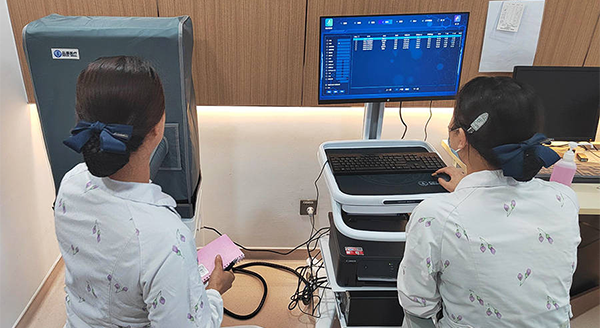
From an operational perspective, the value that DXA equipment brings to medical institutions is equally significant:
High-efficiency detection: A single inspection only takes 1-2 minutes, significantly enhancing the utilization rate of equipment and the efficiency of the department
Patient diversion effect: Osteoporosis, as a common disease among the elderly, has a stable and continuous demand for examinations, which can bring a stable flow of patients to the hospital
Economic benefits: It has a good balance between social benefits and economic benefits
Health management extension: Integrating with physical examination centers, exploring the high-end health management market, and enhancing the overall service level of the hospital
4. Ecological Empowerment: Building a Sustainable Diagnostic Capability System
Selecting an advanced device is merely the starting point for the capacity building of medical institutions. How to ensure that the equipment can exert its clinical value, continuously produce accurate data, and truly integrate into the development of disciplines is a deeper consideration. This relies on a professional support system that runs through the entire life cycle of the equipment.
Precise configuration and efficient implementation: The demands of medical institutions vary greatly. Should it focus on high-traffic physical examination screening or concentrate on high-precision scientific research and complex case diagnosis? The key lies in obtaining a configuration plan based on rich practical experience, so that the equipment model, functional modules are precisely matched with the hospital’s departmental positioning, patient flow and future development vision.
Professional training and talent empowerment: The efficiency of equipment is ultimately unleashed through people. A complete training system is the foundation for achieving “human-machine integration” and enhancing the overall level of diagnosis and treatment.
Full-process quality control and data stability guarantee: Bone density measurement is used for therapeutic effect evaluation and long-term follow-up, and the long-term comparability of data is of vital importance. This cannot be achieved without systematic quality control support, including regular equipment calibration and long-term operation norms. Establishing a sound quality control mechanism is the cornerstone for ensuring the long-term reliability of data and maintaining the reputation of the diagnostic gold standard.
The selection of dual-energy X-ray bone densitometers is essentially a strategic decision made by medical institutions to build systematic diagnosis and treatment capabilities in the field of osteoporosis and related metabolic bone diseases. Against the backdrop of an accelerating aging population and rising health awareness, this choice not only meets the current clinical needs but also represents a forward-looking move to lay out the future market.
Post time: Dec-25-2025