
Ultrasound bone densitometers, valued for their non-radiation approach and ease of operation, serve as crucial tools for osteoporosis screening and monitoring pediatric bone development. The selection of the measurement site depends on specific needs and device capabilities, with the tibia and radius being the two primary sites. Consultation with a physician or professional technician is recommended when necessary.
Radius (Lateral Forearm Bone)
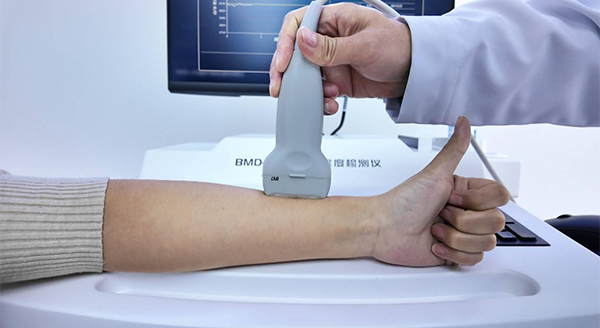
The radius is the most commonly used measurement site after the calcaneus, with the distal one-third of the radius being the primary point of measurement. This area is rich in trabecular bone, making it sensitive to bone loss and capable of reflecting early changes in trabecular bone metabolism.
Advantages: Convenient operation, as the subject’s forearm can be positioned simply, making it suitable for individuals with lower compliance. Results show a high correlation with Dual-Energy X-ray Absorptiometry (DXA) outcomes. It is thus applicable for early osteoporosis diagnosis, monitoring the efficacy of anti-osteoporosis treatments, and is particularly suitable for postmenopausal women and individuals on long-term medication.
Tibia (Medial Lower Leg Bone)
The tibia, the major long bone of the lower leg, features thick cortical bone, abundant blood supply, and a superficial location that facilitates easy positioning. It is an important measurement site for children, the elderly, and other populations.
Advantages: It provides a good reflection of overall skeletal strength and is significantly influenced by systemic nutritional status (e.g., calcium, vitamin D levels). This makes it suitable for monitoring child growth and development, screening for rickets, and conducting preliminary osteoporosis assessments in the elderly. Some devices are equipped with specialized flat probes that conform to the flat anterior surface of the lower leg, ensuring high measurement stability.
About Pinyuan Medical
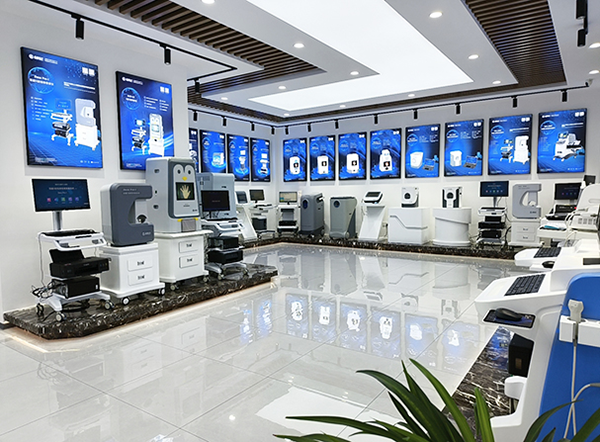
As a high-tech enterprise and technology-based SME integrating “R&D + Production + After-sales Service,” Pinyuan Medical independently researches, develops, and manufactures a range of health and medical equipment. Our product portfolio includes the BMD-A series Ultrasound Bone Densitometers, Dexa Pro series DXA Bone Densitometers, DXA-800 series DXA Bone Densitometers, DXA-500 series (Portable) DXA Bone Densitometers, ADS-6000 series Arteriosclerosis Detectors, LUD-V series Pulmonary Function Testers, and BAD-Q series X-ray Bone Age Assessment Apparatus.
To date, we have served over 5,000 medical institutions across China, including more than 200 major hospitals such as the Capital Institute of Pediatrics, Wuhan Central Hospital, Yinchuan First People’s Hospital, and Suzhou Municipal Hospital. Our products are also exported to over 50 countries and regions, earning a reputation through peer recommendations.
Post time: Jan-15-2026