
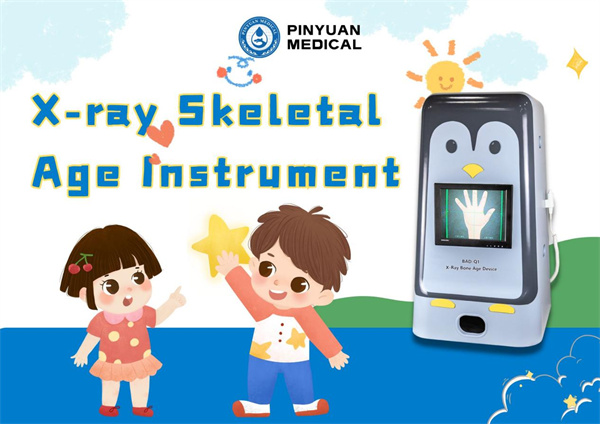
The key to bone age assessment lies in determining the actual age of the bones based on their development morphology. It is an important method for evaluating the growth and development of children and adolescents, predicting adult height, and diagnosing growth and development disorders. The X-ray bone age instrument is a specialized medical device developed for the specific scenario of bone age assessment. It integrates dedicated low-dose imaging, bone age analysis assistance, and data management functions, achieving multi-dimensional upgrades to address the pain points of traditional assessment.
The essence of the advantages of the X-ray bone age instrument is “specialized adaptation to the bone age assessment scenario and systematic solution to the pain points of traditional assessment”. It retains the core value of X-ray imaging as the gold standard for bone age assessment, and has achieved upgrades in aspects such as radiation protection, detection efficiency, result standardization, data management, and scenario expansion. It is particularly suitable for children and adolescents, as well as for detection needs in grassroots medical institutions and growth and development specialist clinics. The specific advantages are as follows:
1. Radiation is more controllable and more suitable for children’s radiation protection needs. The audience of bone age assessment is children and adolescents, whose hematopoietic system and skeletal system are more sensitive to radiation. Radiation protection is an important requirement for children’s radiation examinations. The X-ray bone age instrument uses a low-dose exposure algorithm, precise beam limiting technology, and lead protection accessories for triple protection, controlling the radiation dose within the safe range for children’s radiation examinations. At the same time, it focuses only on the wrist bone detection area to reduce unnecessary radiation exposure, conforming to the principle of “minimizing radiation” in children’s medical care.
2. Detection is more standardized, reducing result deviations. The imaging quality and reading results of traditional assessment highly depend on the experience of operators and doctors, which may lead to problems such as “inadequate imaging due to deviation in body position” and “inconsistent results from different doctors”. This affects the accuracy of diagnosis. The X-ray bone age instrument uses hand positioning diagrams, screen monitoring, software monitoring “three positioning technologies”, and preset exclusive imaging parameters to ensure consistent imaging quality for each shot, avoiding re-shooting due to operational issues; at the same time, the reading and interpretation system uses international standard algorithms such as TW3 method and Chinese 05 method as the basis, automatically identifying skeletal development characteristics, reducing subjective judgment errors, and making the bone age results more objective and traceable.
3. The entire process is more efficient, enhancing the efficiency of medical services
Traditional testing involves multiple steps such as parameter setting, body position arrangement, manual image review, and paper-based record-keeping. Each individual test takes a long time and is prone to re-shooting due to imaging issues, causing congestion in the department during the peak period of children’s growth and development check-ups. The X-ray bone age instrument has achieved an integrated process of “one-click shooting + automatic interpretation + data management”. The shooting does not require complex debugging, significantly reducing the total time for each test and minimizing the repetitive work of radiographers and doctors, thereby improving the overall testing efficiency of the department. It is suitable for frequent testing scenarios in professional hospitals, health check-ups, and outpatient clinics.
4. Data management is more systematic, adapting to long-term growth monitoring of children
The growth and development of children and adolescents is a continuous process. Bone age testing requires multiple tracking and multiple test data for long-term follow-up to accurately determine the growth and development trend and evaluate the intervention effect. The X-ray bone age instrument can automatically archive the basic information of the examinee, bone age results, and imaging images. It supports quick retrieval by name, age, and testing time, and can also achieve comparisons of multiple bone age data and bone imaging, visually presenting the progress of epiphyseal closure and the speed of bone development, providing precise continuous data support for doctors to formulate personalized growth and development intervention plans.
5. Lower operational threshold, expanding the service scenarios for bone age testing
Traditional bone age testing requires high proficiency in equipment operation and professional skills of radiology examiners. It can only be conducted in large radiology departments of general hospitals and children’s specialized hospitals. Due to the lack of professional personnel and dedicated equipment in grassroots medical institutions (community hospitals, township health centers), it is difficult to carry out bone age testing services.
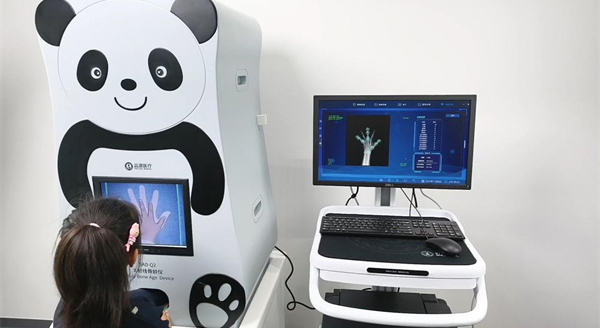
The X-ray bone age instrument simplifies the operation process. The imaging part can be mastered with simple training. The automatic interpretation function reduces the reliance on the doctor’s experience in bone age diagnosis. Meanwhile, the X-ray bone age instrument does not require a dedicated radiology room and can be stationed in community hospitals, growth and development specialist clinics, and children’s health check-up centers, allowing bone age testing to be downsized from large hospitals to grassroots levels, enabling early screening, diagnosis, and intervention for children’s growth and development.
Compared with traditional bone age testing methods, the X-ray bone age instrument solves the core problems of traditional testing through low-dose radiation, standardized testing, automatic analysis, and data management. At the same time, it lowers the operational threshold and expands the service scenarios. Whether it is in children’s specialized hospitals, pediatric departments of general hospitals, or grassroots medical institutions and children’s growth and development clinics, the X-ray bone age instrument can better meet the clinical needs of bone age testing, providing safer, more efficient, and more accurate technical support for the assessment of children’s growth and development, and is also an important direction for the standardized and grassroots development of children’s bone age testing in the future.
Post time: Jan-22-2026