
With the intensification of population aging and the enhancement of public health awareness, bone health management has become a key issue in the field of public health. Against this backdrop, the market demand for bone density testing equipment continues to grow. The dual-screen dual-probe ultrasound bone densitometer BMD-A1, with its features of safety, accuracy and high efficiency, has demonstrated significant application value in various medical scenarios.
Technological innovation: Precise empowerment of dual screens and dual probes
The BMD-A1 ultrasonic bone densitometer, as a non-invasive bone health assessment device, takes ultrasonic technology as its core. By measuring the sound wave transmission velocity and attenuation characteristics of the radius, tibia and other parts, it achieves precise assessment of bone density and bone strength. Its innovative dual-screen and dual-probe design effectively addresses the pain points of detection in various scenarios.
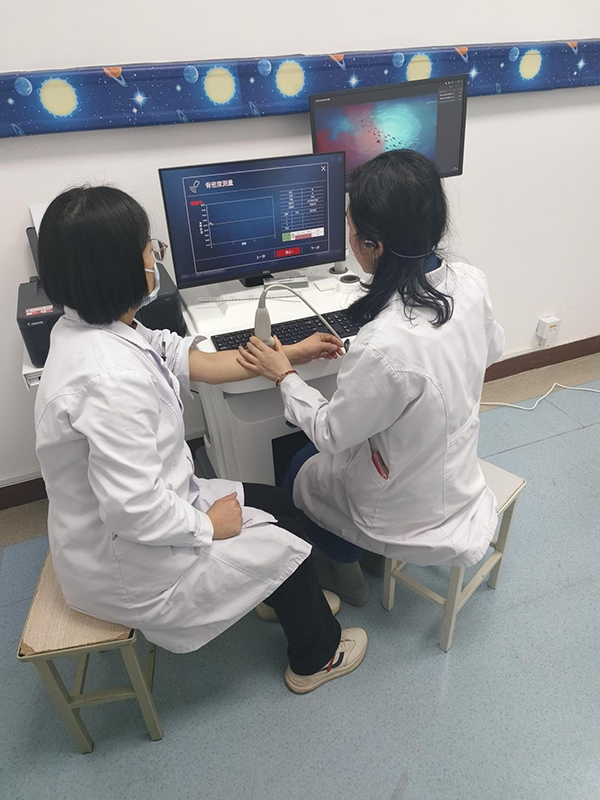
The dual-probe configuration adopts an advanced dual-transmission and dual-reception mode, combined with a high-penetrating ultrasonic frequency, which can not only effectively penetrate the soft tissues of obese people to obtain stable signals, but also support flexible detection of multiple parts. The dual-screen interaction design further optimizes the medical experience: the main screen is for medical staff to set parameters and analyze results, while the secondary screen can synchronously play health science popularization animations or soothing music, which helps relieve the tension of children, the elderly and other groups during the testing process and reflects the concept of humanistic care.
The dedicated real-time data analysis system equipped on the device integrates a multi-population bone density database covering people from Europe, America and Asia. It can automatically identify different groups such as children, adolescents, adults and the elderly based on the age of the examinee, without manual switching, and directly generate color reports containing multiple indicators such as T value and Z value, providing comprehensive data support for clinical decision-making.
Scene adaptation: Precisely meeting diverse medical needs
Medical institutions: Support precise diagnosis and treatment as well as long-term management
In departments such as orthopedics, endocrinology and geriatrics in public hospitals, BMD-A1 has become an important tool for bone density screening and therapeutic effect monitoring. Orthopedics can distinguish osteoporosis based on its test results and guide the treatment path. The endocrinology department, leveraging its sensitive monitoring capabilities, tracks the bone mass changes of patients with metabolic diseases and collaboratively adjusts the hypoglycemic and anti-osteoporosis treatment plans. The geriatrics department can conduct regular screenings for high-risk groups, promoting early detection and intervention of osteoporosis.
Health check-ups: Facilitating large-scale population screening
The “Guidelines for the Recommendation of Health Checkup Items for Adults (2025 Edition)” clearly suggests that bone density testing be included in the routine health checkup items for people aged 40 and above, driving a significant increase in the demand for related services. The radiation-free feature of the BMD-A1 ultrasonic bone densitometer makes it suitable for all kinds of physical examination groups, especially meeting the safety needs of radiation-sensitive groups such as children, women preparing for pregnancy and pregnant women.
In high-throughput scenarios such as physical examination centers, this equipment is easy to operate and has low maintenance costs, which is conducive to controlling human input. Combined with rapid detection capabilities, it can effectively improve the average daily detection efficiency.
Maternal and child health care: Safeguarding the bone health of Special Groups
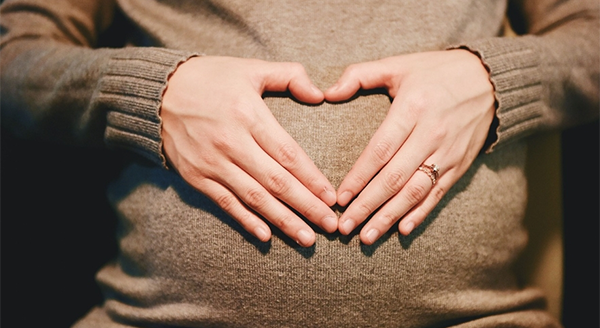
The assessment of bone health for children and pregnant women has very high requirements for the safety of equipment. The BMD-A1 ultrasonic bone densitometer, which adopts ultrasonic technology, has no radiation risk and has become an ideal choice in the field of maternal and child health care. Pediatrics can precisely assess bone mineral density using its dedicated database for children, providing a basis for growth and development monitoring and intervention. For pregnant women, the device can dynamically track calcium loss, assist in formulating personalized nutrition and calcium supplementation plans, and reduce the risk of postpartum osteoporosis.
Primary healthcare: Promoting the downward flow of bone health services
Under the impetus of the hierarchical medical treatment policy, the demand for bone density testing in primary medical institutions is increasing day by day. The BMD-A1 ultrasonic bone density meter adopts an integrated trolley design, with a simple process and a fully Chinese operation interface, which lowers the learning threshold for grassroots medical staff. Besides medium and large medical institutions, it is also suitable for community health service centers, township health centers and other scenarios.
By conducting regular bone density screenings, grassroots institutions can gradually establish bone health records for residents, achieve long-term health management for key groups such as the elderly and patients with chronic diseases, and help build an integrated grassroots bone health service system of “screening – intervention – management”.
Market value: In line with the industry development trend
The current bone density testing market is developing towards scenario-based, convenient and safe directions. The BMD-A1 ultrasonic bone density meter is highly consistent with this trend in terms of technical design and application mode. Its radiation-free feature responds to the safety concerns of special groups. The dual-screen interaction enhances the experience of the examinees. The multi-population database ensures the accuracy of tests for different groups. The high cost-performance advantage is conducive to large-scale popularization in grassroots institutions and physical examination centers, and it has good market adaptability and promotion prospects.
Post time: Dec-25-2025